



Dental Implant Failure & Salvage Vero Beach
Renewing Your Restored Smile
Dental implants are consistently successful, so there is no need to be unduly worried that something will go amiss with your new smile. You can use your new teeth with confidence day after day, year after year! However, while it is unlikely that something will go wrong, it is not totally impossible. In rare cases, dental implant failure can occur. If you ever believe that is happening to you, get in touch with our Vero Beach team right away. We will do all we can to address the issue so you can go back to enjoying a strong and problem-free smile.
Why Do Dental Implants Fail?
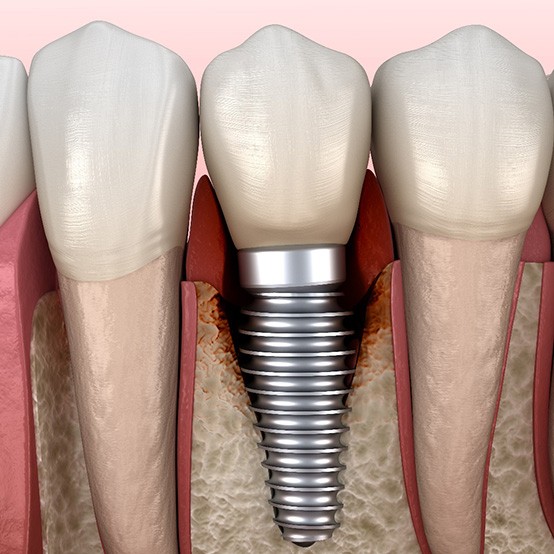
There are a few different reasons why dental implants may fail, the most common of which is an infection called peri-implantitis. This is a type of gum disease. When harmful bacteria proliferate and invade the gums and bone around an implant, they can cause severe tissue damage. Eventually, the implant may loosen or even fall out. Missteps in oral hygiene are often a major contributor to the development of peri-implantitis.
Other factors that can lead to a failed dental implant include:
- Underlying medical conditions, such as bone disease or certain types of cancer.
- Damage to the implants or surrounding tissue, potentially caused by teeth grinding or a facial injury.
- Failure of the implants to bond with the surrounding bone (failed osseointegration).
Symptoms of a Failed Dental Implant

Dental implant failure can happen at virtually any time, whether it is soon after the initial procedure or years down the line. That is why we encourage you to keep a close eye on your oral health so you can recognize signs that something might be wrong.
Here are some reasons to call us for assistance:
- You are experiencing severe or unusual pain. After you heal from the dental implant procedure, you should not experience any significant discomfort around your implants. Severe or ongoing pain should be evaluated by our team.
- It is difficult for you to chew. Once you adapt to your implants, it should be easy for you to eat virtually any food. Problems in this area are a big red flag.
- One of your implants feels loose. This could be a problem with the restoration on top of the implant or the implant itself.
- There are signs of an infection. Redness, swelling, bleeding, and pus around an implant could all point to the presence of a dangerous infection.
How Dental Implant Salvage Works

You should schedule an appointment with us as soon as you suspect that something is wrong with your implants. The earlier you receive care, the more likely it is that we can address the situation with relatively conservative means.
During your visit, we will thoroughly examine your mouth and learn about your symptoms. After we gather adequate information, we can advise you on your next steps. You might need something relatively simple, like some antibiotics or a new restoration. However, if the problem is more severe, we might need to surgically remove the failing implant. Later, after any necessary restorative care and a recovery period, you might become eligible to receive a new one.